
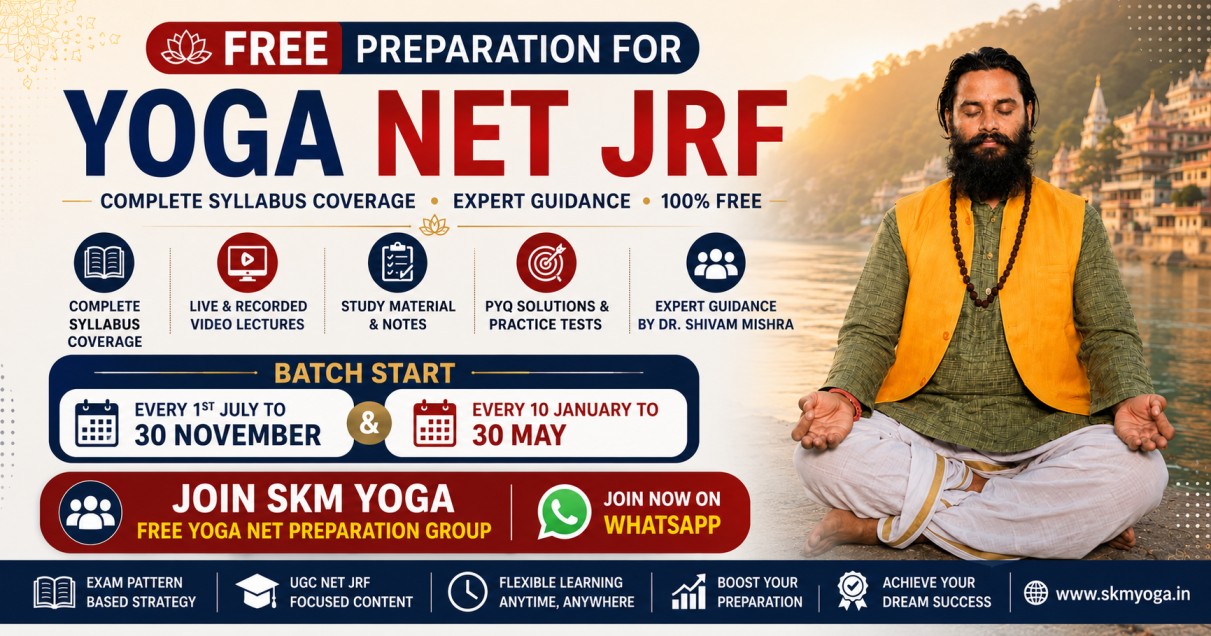
Yoga NET JRF is one of the most important national-level competitive examinations for yoga students in India conducted under the UGC NET (University Grants Commission National Eligibility Test). This examination is designed for candidates who want to become Assistant Professors, pursue PhD admissions, receive the prestigious Junior Research Fellowship (JRF), or build a professional academic career in the field of yoga education and research.
The UGC NET Yoga Examination evaluates students on various important subjects including Yoga Philosophy, Patanjali Yoga Sutra, Hatha Yoga, Bhagavad Gita, Upanishads, Yoga Therapy, Anatomy & Physiology, Research Methodology, Teaching Aptitude, Meditation, Pranayama, and many other theoretical and practical concepts related to yoga studies.
To crack the Yoga NET JRF Examination, students need proper guidance, conceptual clarity, regular revision, mock test practice, previous year paper analysis, and a systematic study plan. Success in Yoga NET JRF depends on understanding concepts deeply rather than memorizing facts. Students should focus on completing the syllabus unit-wise, practicing MCQs regularly, improving time management, and revising important topics continuously.
SKM Yoga has become one of the trusted educational platforms for Yoga NET JRF Preparation because of its structured teaching methodology, easy explanations, exam-oriented preparation strategy, and completely free educational resources available online. Our mission is to provide authentic and high-quality yoga education to every student preparing for UGC NET Yoga across India.
At SKM Yoga, students get access to complete free Yoga NET JRF preparation videos available on the official SKM Yoga YouTube Channel. All lectures are explained in simple language for both beginners and advanced aspirants. Students can watch the entire playlist anytime from anywhere and prepare at their own pace without financial burden.
Our educational content covers complete UGC NET Yoga syllabus including unit-wise classes, important MCQs, mock tests, previous year paper discussions, revision sessions, research methodology classes, teaching aptitude preparation, and important exam strategies to help students score better marks in the examination.
One of the major advantages of learning through SKM Yoga is that students receive authentic yogic knowledge combined with competitive exam preparation techniques. Our classes focus on conceptual understanding, practical application, answer analysis, memory techniques, and continuous practice which helps aspirants improve confidence and examination performance.
The SKM Yoga YouTube Channel regularly uploads educational lectures, marathon sessions, important theory discussions, PYQ analysis, and strategy videos for Yoga NET JRF aspirants. Thousands of students across India use these free resources daily for systematic preparation and revision.
If you are serious about clearing UGC NET Yoga, earning JRF, becoming an Assistant Professor, or building a successful academic career in yoga, SKM Yoga provides one of the best free online platforms to start your preparation journey with proper guidance, expert teaching, and complete study support through YouTube classes and educational resources.
Download the Old and New UGC NET JRF Yoga Syllabus PDFs and prepare according to the latest examination pattern.
Download the previous UGC NET JRF Yoga syllabus PDF for reference and comparison.
View PDF Download PDFDownload the latest revised UGC NET JRF Yoga syllabus PDF and prepare according to the updated pattern.
View PDF Download PDFComplete Guide to Exam Pattern, Eligibility Criteria & Expected Cut-Off
| Paper | Questions | Marks | Duration | Question Type |
|---|---|---|---|---|
| Paper I (General Aptitude) | 50 | 100 | 3 Hours (Combined) | Teaching, Research Aptitude, ICT, Reasoning & Communication |
| Paper II (Yoga) | 100 | 200 | Yoga Philosophy, Anatomy, Physiology, Hatha Yoga, Therapy, etc. |
| Criteria | Requirement |
|---|---|
| Educational Qualification | Master's Degree in Yoga or related discipline with minimum 55% marks (50% for reserved categories) |
| Final Year Students | Eligible to Apply |
| Age Limit (JRF) | Maximum 30 Years (Relaxation as per Government Norms) |
| Age Limit (Assistant Professor) | No Age Restriction |
| Category | JRF Cut-Off | Assistant Professor Cut-Off |
|---|---|---|
| General | 65% – 70% | 55% – 60% |
| OBC-NCL | 60% – 65% | 50% – 55% |
| SC / ST / PwD | 55% – 60% | 45% – 50% |
A smart preparation strategy, consistent study routine and regular revision can help you qualify UGC NET Yoga and achieve JRF. Follow these proven steps to improve your score and rank.
Start with the latest UGC NET Yoga syllabus. Divide all 10 units into manageable sections and prepare a clear study roadmap.
Prepare concise notes for every unit. Focus on definitions, concepts, yoga texts, research methodology and important theories.
Maintain a fixed study schedule. Even 3–5 focused hours daily can create a significant advantage over inconsistent preparation.
Solve topic-wise and full-length mock tests regularly. This improves speed, accuracy and confidence for the examination.
Multiple revisions are essential for retention. Create short revision sheets and revise important points every week.
Study previous year questions to identify important topics, repeated patterns and high-scoring areas of the syllabus.
Complete the syllabus → Make quality notes → Revise continuously → Practice mock tests → Analyze mistakes → Improve accuracy. Consistency, discipline and smart preparation are the keys to clearing Yoga NET JRF with a high score.
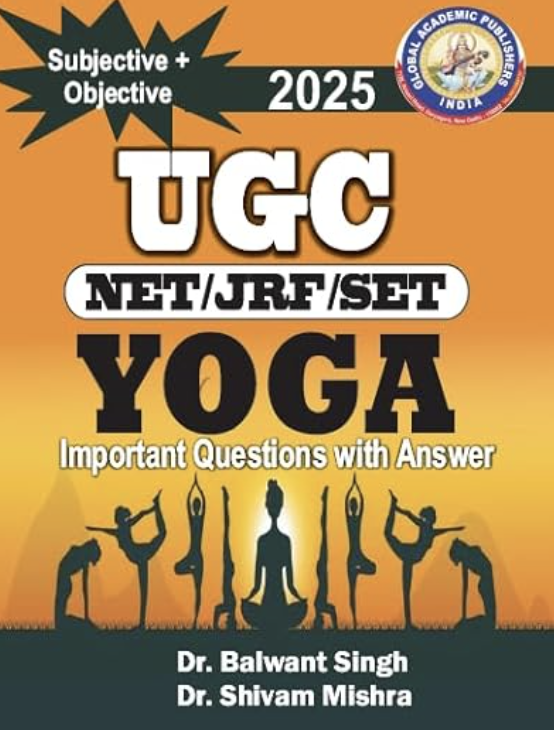
Prepare for Yoga NET, JRF and SET examinations with this comprehensive guide. Designed according to the latest syllabus, this book helps students strengthen concepts, revise efficiently and improve examination performance.
Thank you for visiting our website.
Subscribe to our YouTube Channel and watch more Yoga Classes,
Yoga NET/JRF Preparation Videos, Yoga Notes, Teacher Training Sessions,
Meditation Practices, and Wellness Content.
Unit-wise Premium Study Material for UGC NET Yoga Aspirants by SKM Yoga
Complete preparation classes for Yoga NET JRF by SKM Yoga.
Important concepts, MCQs, and detailed explanation classes.
Free YouTube preparation sessions for Yoga NET JRF aspirants.
Preparing for the UGC NET JRF Yoga examination requires a smart strategy, proper study plan, quality notes, repeated revision, mock tests, and complete coverage of all ten Yoga NET syllabus units. Most Yoga NET JRF toppers follow a structured preparation method rather than studying randomly. Below are the proven strategies used by successful candidates to qualify both NET and JRF in Yoga.
Top rankers first focus on completing the entire Yoga NET syllabus. Many candidates fail because they study only selected topics. Every unit including Yoga Foundations, Traditional Texts, Yoga Therapy, Research Methodology, Anatomy, Physiology, Psychology, Education and Naturopathy must be covered thoroughly.
Successful candidates prepare concise revision notes while studying. These notes contain important definitions, Yoga Sutras, dates, books, authors, concepts, therapies, and research terms. Short notes help revise the complete syllabus multiple times before examination day.
A significant number of questions are asked from Patanjali Yoga Sutra, Hatha Yoga Pradipika, Gheranda Samhita, Bhagavad Gita, Upanishads, and classical Yoga literature. Toppers ensure they understand important concepts, chapters, sutras, and philosophical teachings from these texts.
Previous year papers reveal the actual pattern of questions asked in the examination. Toppers solve multiple years of UGC NET Yoga question papers to identify repeated concepts, important areas, and improve their examination confidence.
Research Methodology contributes questions in both Paper 1 and Paper 2. Topics such as hypothesis, sampling, research design, validity, reliability, statistical methods, and data interpretation must be studied carefully for higher scores.
Regular MCQ practice improves conceptual clarity and speed. Most toppers solve 50–100 Yoga NET MCQs daily. Continuous practice helps identify weak areas and improves examination performance significantly.
Many candidates focus only on Yoga Paper 2 and ignore Paper 1. Toppers prepare Teaching Aptitude, Research Aptitude, ICT, Communication, Logical Reasoning, Reading Comprehension, and Higher Education topics consistently.
Mock tests simulate the actual examination environment. Top performers usually attempt 20–30 mock tests before the exam. This improves time management, question selection, and overall confidence.
Important Questions Asked by UGC NET Yoga Aspirants
UGC NET Yoga is a national-level examination conducted by NTA for determining eligibility for Assistant Professor and Junior Research Fellowship (JRF) in Yoga. The exam assesses a candidate's knowledge of Yoga philosophy, practices, anatomy, research methodology, traditional texts, yoga therapy, psychology, and education.
Candidates who have completed a Master's Degree in Yoga with at least 55% marks (50% for reserved categories as per rules) are generally eligible. Final-year postgraduate students can also apply provisionally. Always check the latest NTA notification before applying.
The examination consists of two papers conducted in a single session. Paper 1 evaluates teaching aptitude, research aptitude, reasoning, comprehension, ICT, and higher education awareness. Paper 2 is subject-specific and focuses entirely on Yoga.
The syllabus contains 10 major units including Yoga Foundations, Schools of Yoga, Human Anatomy & Physiology, Psychology, Research Methodology, Yoga Therapy, Naturopathy, Traditional Texts, Education, and Contemporary Developments in Yoga.
No. UGC NET currently has no negative marking. Candidates are encouraged to attempt all questions because there is no penalty for incorrect answers. This strategy can significantly improve overall scores.
The examination contains a total of 150 objective-type questions. Paper 1 contains 50 questions carrying 100 marks, while Paper 2 contains 100 questions carrying 200 marks. The total examination carries 300 marks.
Important books include Patanjali Yoga Sutra, Hatha Yoga Pradipika, Gheranda Samhita, Bhagavad Gita, Yoga Psychology texts, Yoga Therapy books, Research Methodology books, and comprehensive UGC NET Yoga guides covering all ten units.
Most successful candidates prepare consistently for 4 to 8 months. The duration depends on previous knowledge of Yoga, study hours per day, revision strategy, and practice through mock tests and previous-year question papers.
The examination is moderate to difficult because it combines theoretical knowledge, practical understanding, research methodology, and interdisciplinary concepts. However, candidates with a structured study plan and regular revision can score very well.
Candidates qualifying NET become eligible for Assistant Professor positions. Candidates securing higher marks may qualify for JRF, which provides research fellowship benefits and financial assistance while pursuing research or a Ph.D.
A score above 180 out of 300 is generally considered competitive, although cut-offs vary every cycle depending on difficulty level, category, and number of candidates appearing for the examination.
No official weightage is fixed, but Yoga Foundations, Traditional Texts, Research Methodology, Yoga Therapy, Anatomy and Physiology frequently contribute a substantial number of questions in Paper 2.
Yes. Previous year papers help identify important topics, recurring concepts, examination trends, and question patterns. They also improve time management and confidence before the actual examination.
Yes. Many candidates qualify through self-study using quality notes, standard books, mock tests, and previous-year papers. Consistency and revision are often more important than joining coaching institutes.
Research Methodology is extremely important because questions are asked both in Paper 1 and Paper 2. Topics such as hypothesis, sampling, statistics, validity, reliability, and research design are frequently tested.
Yes. Yoga Therapy is one of the most important units. Questions are frequently asked regarding lifestyle disorders, stress management, diabetes, hypertension, obesity, respiratory disorders, and therapeutic applications of Yoga.
A balanced study plan should include one Yoga unit, one Paper 1 topic, revision of previous topics, and daily MCQ practice. Consistent study of 3–5 hours daily can yield excellent results over time.
Candidates should ideally attempt at least 20–30 full-length mock tests before the examination. Mock tests improve speed, accuracy, confidence, and help identify weak areas requiring additional preparation.
Patanjali Yoga Sutra is generally considered the most important text because questions are regularly asked from its philosophy, definitions, Chitta Vrittis, Kleshas, Samadhi, and Ashtanga Yoga concepts.
Complete all 10 units thoroughly, revise repeatedly, solve previous year papers, attempt mock tests, focus on traditional texts, research methodology, anatomy, and maintain short revision notes. Consistency and repeated revision remain the key factors behind success.
Stay connected with India’s leading yoga brand for yoga classes, teacher training, retreats, meditation, yoga NET JRF preparation, wellness coaching and holistic healing programs.
Daily yoga inspiration, retreat updates, yoga events, transformation stories and wellness sessions.
Explore yoga reels, meditation clips, yoga lifestyle content and premium wellness visuals.
Watch yoga classes, pranayama tutorials, yoga NET lectures and healing practices online.
Receive yoga updates, training notifications, retreat schedules and wellness announcements instantly.
Get direct support, yoga class information, instant bookings and personalized wellness guidance.
Connect professionally with SKM Yoga for corporate wellness and yoga education opportunities.
Follow yoga news, wellness trends, motivational thoughts and official SKM Yoga updates.
Speak directly with SKM Yoga experts for yoga classes, TTC programs and retreat consultations.